


Frequently asked questions about redundancy and the redundancy process
Below, we answer some frequently asked questions about redundancy, from an employer’s perspective. If you find yourself in a position where redundancy is a potential consideration for your business, we strongly advise seeking professional HR support to ensure you follow the procedure correctly.
What is redundancy?
Redundancy is the process of dismissing someone from their job because there is less need for resource. There are many reasons why this may be the case: the employer could have ceased trading, lost a major contract, be required to reduce headcount for financial reasons or stopped carrying out an activity of a certain kind, for example.
The key thing to note is that it’s the role that is redundant not the person doing the role. This may seem like semantics but it can help someone at risk understand they are not to blame. And as an employer, you should be able to express why you are in a redundancy situation, in line with the relevant legislation.
What is the redundancy process?
Redundancy can be daunting for both employer and employee and it is important that the correct redundancy process is followed. There are 6 main steps in the redundancy process:
- Establish fair reason for redundancy – see below for a list of legally acceptable reasons to make a role redundant.
- Consider alternatives to redundancy: you may be able to avoid redundancy by making adjustments to the way you work, reducing the use of contact or temporary staff or considering redeployment opportunities within the business – this is something we can help you assess.
- Redundancy consultation: this starts with informing those at risk of what is proposed and what the process will involve. Affected staff are then consulted with on an individual basis, with a right of accompaniment if they wish.
- Deciding Selection criteria if a competitive redundancy situation applies and using this to identify who will be made redundant.
- Offering Suitable alternative roles for those at risk, where appropriate
- Dismissal by redundancy: informing those that will be leaving and making arrangement for final payment etc.
Also consider whether you wish to offer additional support to those affected, such as outplacement sessions, funding for courses or an enhanced settlement package.
For further information on each of the steps in the redundancy process, request a copy of our free Guide to Redundancy here.
We also offer redundancy support to help you through the process, including holding consultation meetings, reviewing alternatives, setting criteria and delivering outplacement support.
What are fair reasons for redundancy?
There is a legal framework attached to redundancy so it is important to take this into account.
Fair reasons for redundancy include the following:
- your organisation is closing down
- your organisation is relocating
- the work done by at-risk employees is diminishing or is no longer required
- the work done by at-risk employees could be carried out by others
- ownership of the organisation is being transferred to a different organisation
For more information on fair reasons for redundancy and redundancy legislation, request a free copy our free Guide to Redundancy here.
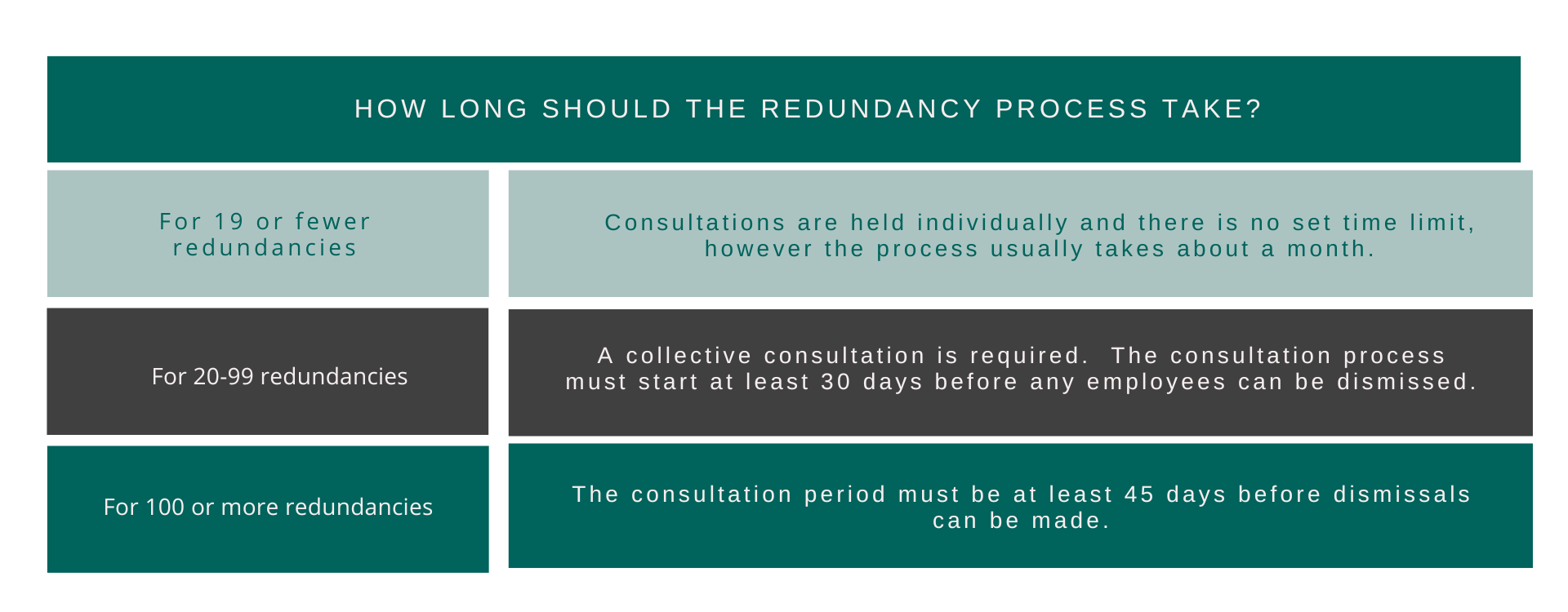
How long should the HR redundancy process take?
The length of process depends on how many people are at risk.
How do you calculate redundancy pay?
There are two types of redundancy pay.
Statutory redundancy pay is the amount an individual is legally entitled to.
Contractual redundancy pay is any extra amount an employer has agreed to pay as stated in the employment contract. Employers are not obligated to offer contractual redundancy pay but must meet any agreed contractual obligations made.
Calculating Statutory redundancy pay:
An employee that has worked continuously for over two years is entitled to the minimum amount. Redundancy pay calculations also take into consideration:
- age
- length of service (capped at 20 years for statutory pay)
- weekly pay (currently capped at £700* per week)
*There is a weekly cap for statutory redundancy payments which is set by the government and reviewed annually. This is the 2024 figure.
Payments for accrued unused holiday and payment in lieu of notice should also be taken into consideration.
The basic rule for calculating redundancy pay is laid out below but for ease, try our Statutory Redundancy Pay Calculator:

Can you make someone redundant on maternity leave?
Whilst it is possible to make someone redundant if they are pregnant or on maternity leave, it is unlawful to make them redundant because they are pregnant or on maternity leave, therefore it must be possible to demonstrate that there is a different and legitimate reason for redundancy.
There are also special rules that apply if any of the at-risk employees are pregnant or on maternity leave. If this is relevant in your situation, we’d be happy to advise further.
Can you make someone redundant if they are on sick leave?
You can make someone who is on sick leave redundant, however it may be necessary to make adjustments to your process to ensure you are acting reasonably and fairly.
If an individual feels discriminated against on health grounds and takes you to employment tribunal, being able to demonstrate that you have considered all alternatives to redundancy, that your selection criteria is fair and that you have made all reasonable adjustments to ensure a fair process is vital.
Having an experienced HR person guiding you through the redundancy process can help the minimise the risk of employment tribunal. If you need support with the redundancy process, contact us today.
Can redundancy be based on performance?
Redundancy should not be used as a means to get rid of someone who is underperforming. Underperformance should be dealt with using a performance management procedure. However standard of work could be included as part of the selection criteria, so long as it is objective and measurable, and the criteria is applied fairly across all affected employees.
The impact of redundancy of wellbeing
Going through redundancies is never a nice experience in an organisation, and as an employer or manager you may feel upset or even distressed about what needs to be done. And even those who aren’t directly affected by a redundancy process can be left with survivor guilt. Read our article on managing redundancies with compassion for advice on how to reduce the stress and impact of all involved.
It’s also important to take time to care for your own mental wellbeing during this time and seek support if necessary.
How can we help you?
Hopefully our redundancy FAQs will give you a running head start, however, if you need further advice, Pure Human Resources are a team of experienced HR consultants who can guide you through the redundancy process. We can help ensure you are compliant with your obligations as an employer and support you through what can be a very challenging time. You can request a copy of our Guide to Redundancy here.
If you would like to talk to somebody about redundancy issues, contact us using the form below to request a callback.


