


Dismissing an employee with less than 2 years service. Your questions answered.
Our clients sometimes ask us about dismissing staff within 2 years of employment – whether it’s easier to do, without causing any issues.
There are many reasons why you are considering dismissing someone with a short service period – maybe they haven’t proved to be a good fit for your business or there are already issues with conduct or capability.
It’s important to note that dismissing someone from your employment is always a serious situation that you should take advice on, whatever the circumstances, and the appropriate processes should be followed. When dismissing an employee with less than 2 years service, employers can consider dismissal without the need to go through a full disciplinary or capability process as it’s only when you reach two years of continuous employment that you automatically get statutory protection against unfair dismissal.
However, even though dismissing staff within 2 years of employment is a lower risk to your business, there are some exceptions to the rule, and there are circumstances whereby employees can bring a claim against you, as their employer, regardless of their length of service and of course, as a good employer, you will want to show that you are acting fairly to all your employees.
Below we answer some common questions we’re often asked about dismissing an employee with less than 2 years service.
Alternatively you can listen to Pure Human Resources Managing Director, Stephanie Fosh, talking about dismissing staff within 2 years of service in our short video.
So, how do you dismiss an employee with under two years of service?
Even though you may not be obliged to, if you need to dismiss an employee with less than two years’ service, we would still advise you to follow the same process that is detailed within your disciplinary or your capability procedure, just as you would for anyone else regardless of their length of service.
Our Managers Guide to Disciplinary Procedure lays out the steps, as defined by the ACAS code of practice, that you should go through if you need to remove somebody from your business, and these steps are just as applicable if your employee hasn’t reached the two-year milestone of continuous employment with you.
Are they protected by the Equality Act 2010?
Yes! All employees, regardless of length of service are protected by the Equality Act 2010 (in fact, even applicants applying to work for you are protected, even if they don’t join your organisation).
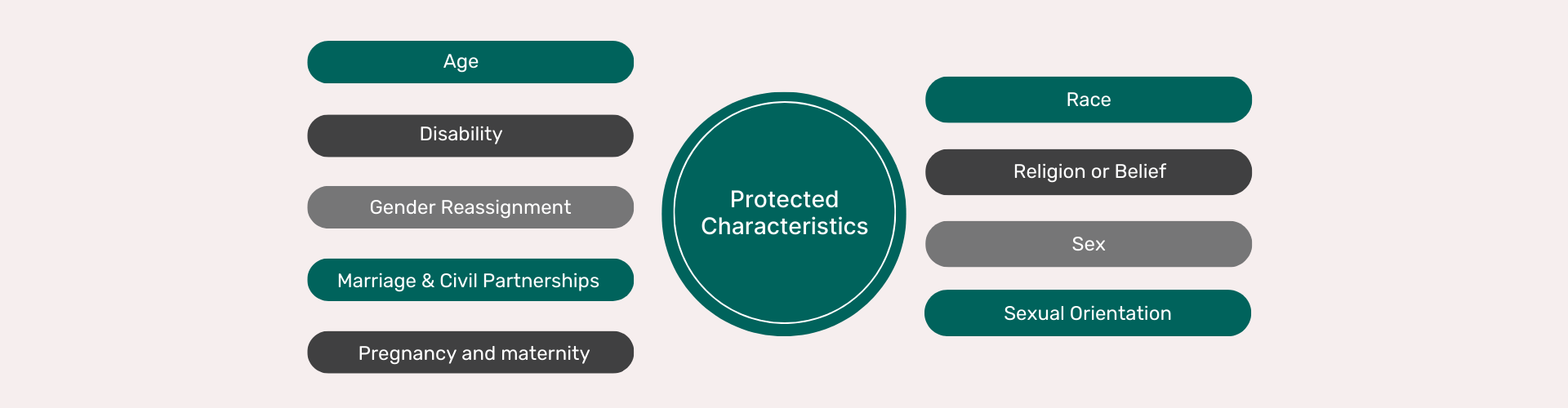
Firstly, you need to check if their personal circumstances mean that they are protected by one of the nine characteristics covered in the Equality Act that make discrimination unlawful. These are age, sex, race, religion & belief, disability, marital status, gender reassignment, pregnancy & maternity and sexual orientation.
If so, they may not need two years’ service to bring a claim against you at an employment tribunal. Remember, unfair dismissal under 2 years can still become an issue for your business. This is why we would recommend that you take professional advice from a company like ours, in all circumstances, rather than make the assumption that there is no risk of them being able to claim against their dismissal just because they had less than two years of service in your company.
Do you have to give a reason for dismissing an employee within 2 years of service?
Although you are not legally obliged to, it is important for several reasons that you give anyone you are dismissing a valid reason for doing so, however long or short a time they have worked for you. It is not fair to leave them wondering why they have been dismissed and, if they leave your employment on bad terms, feeling unjustly mistreated, it could have a negative impact on your brand if they share their sentiments online or via their network.
You don’t have to give them a lot of detail, but certainly enough for them to understand why they are being dismissed. For example, it might be that they failed to meet their targets after sufficient training and support, or their attendance was unacceptable. This can also help to avoid claims for unfair dismissal under 2 years as your employee will understand that the reason they have been dismissed is fair and unbiased.
You should always confirm your reason/s for the dismissal to the employee in writing.
I need to dismiss someone during a probationary period, can I just let them go?
A probation period is out of scope of the disciplinary procedure.
If you have got a probationary period built into your contract of employment, which would typically be three or six months, and you feel that somebody is just not performing and you need to let them go, it is really important to communicate that clearly to them. Out of goodwill and courtesy, you should meet with the employee to give them your feedback, by inviting them a probationary review meeting. You could wait until the end of the probationary period or, if the situation is really severe and you feel it is necessary to part ways immediately, then you could bring their probationary review forward.
After your meeting, you should confirm your reason/s for dismissal in writing, so the employee is clear about the situation and there is no confusion or misunderstanding.
Hopefully, if you have a conversation with them, it might not end that way. You might be able to get things back on track and the employee might be able to reach the required standard of performance.
Contact Pure® Human Resources
If you have any queries about dismissing an employee with less than 2 years of service, or if you have any other HR queries, we are here for you.
Our friendly and expert team has helped many clients to successfully navigate these situations, and we are here to help you today. We offer a Pay As You Go HR package for ad hoc expert HR advice, as and when you need it, and Retained HR services for on-going HR needs.
You can call us on 01794 329470, email us or fill out our Contact Form and will be in touch.

To receive more useful resources and guides to dealing with common HR issues, straight into your inbox, sign up to receive Pure Human Resources newsletter here.


