


Discrimination in recruitment process is an often-overlooked risk facing any employer, in fact it’s one of your biggest risks as it’s so under-acknowledged.
Employers often imagine that their only liability when it comes to discrimination is with their employees but that is not the case, it begins before someone even starts working with you. Before you’re even aware of them in fact.
There are a number of areas where you risk a discrimination claim during the recruitment process. From how you promote the role through to how you select your candidates, as well as why you reject other candidates.
Promoting your role
Consider your criteria and language:
The criteria you lay out and the language you use in your job ads could be grounds for a discrimination claim. Asking for ‘highly experienced’ applicants, for example, could be seen as discriminatory against younger people, who have only just left education. You should consider being more specific in the type of experience and skill level rather than using this kind of wording.
Don’t create unnecessary barriers for applicants
You should avoid limiting where you advertise in a way that prevents certain groups from seeing the advert, therefore not giving them an opportunity to apply. E.g. advertising only within a Men’s magazine would discriminate against women who would be considerably less likely to see it.
Application process
Your application process is another area that opens you to risk.
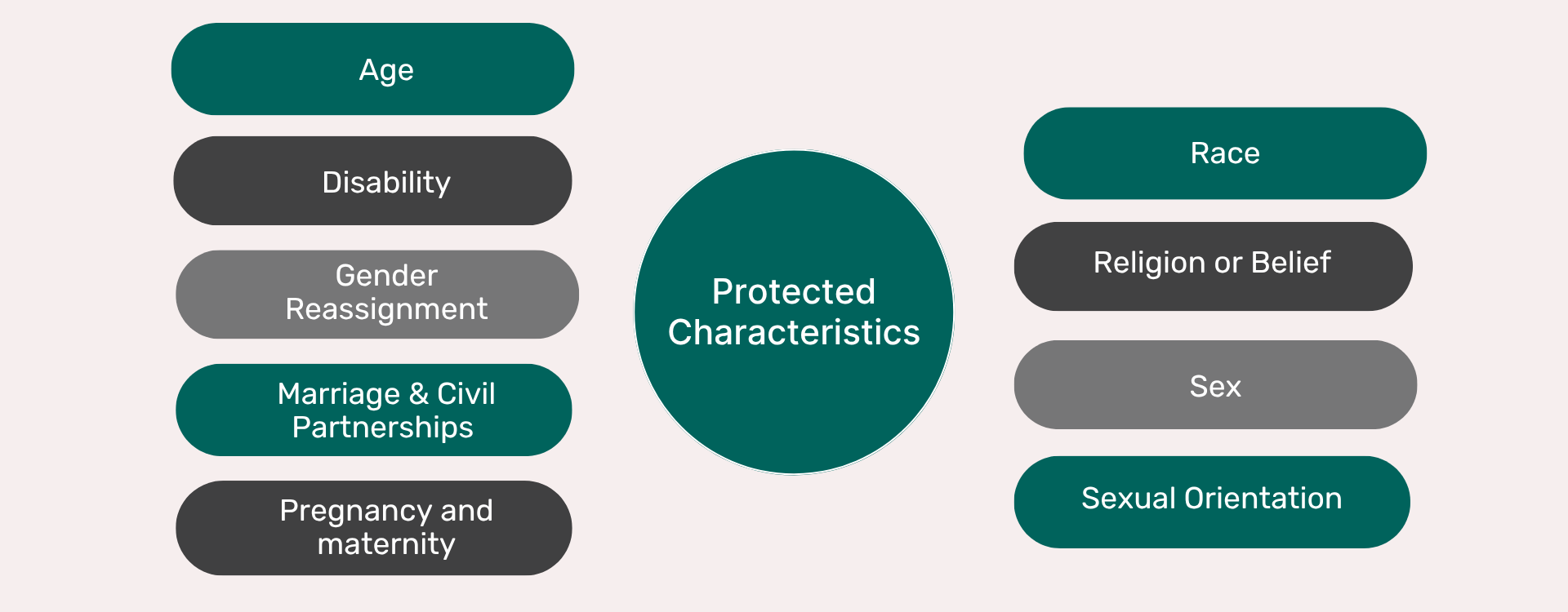
Consider the questions you are asking on your application forms and in interviews, and the formats you are using. Any questions relating to one of the protected characteristics and anything that puts an individual with a protected characteristic at a disadvantage should be avoided.
With interviews, you should ensure anyone involved in the process has had suitable Equality, Diversity and Inclusion (EDI) training and is alert to the risks. What might seem like friendly conversation in asking if someone has children, for example, could open you up to a discrimination claim if that person is later rejected and they claim it was because of their child status.
There are a few exceptions, where the job has certain requirements, but you must be able to prove that requirement e.g. it is acceptable to ask someone’s age/ date of birth if the role involves selling alcohol because you cannot sell alcohol if you are under 18 years of age.
It is also ok for you to invite everyone to let you know about any reasonable adjustments they may require during the recruitment process e.g. if they need to ensure the interview location is accessible but you cannot use that as reason to reject them. It’s always worth considering accessibility when choosing a location in the first place.
Rejecting candidates
When rejecting candidates, ensure the reasons you have for rejecting them are not based on a protected characteristic. Whilst rejecting candidates feels time consuming and unpleasant, the more transparent you are in your rejection communication the less room there is for a discrimination claim. Provide a reason that is based on skills or knowledge in areas where protected characteristics have no bearing.
When there are multiple people involved in your process the risk of discrimination in recruitment increases. Ensuring all hiring managers and those involved in the recruitment process have had adequate EDI training and aware of your own company policies considerably reduces this risk.
To prevent discrimination in recruitment, choose our guaranteed discrimination-free Fixed Fee Recruitment service. We will create job adverts for you and advertise widely to ensure no one is disadvantaged. Our shortlisting process is based on your criteria but we will always advise if we believe your criteria opens you to discrimination claim risks, and help you rethink your requirements. The final interview and selection process is still down to you, so we would always still recommend that your interviewing panel has had suitable equality, diversity and inclusion training.
Our Equality, Diversity and Inclusion Training covers
- Understanding the legislation of the Equality Act 2010
- Identifying protected characteristics and types of discrimination
- Reviewing your own policies and procedures to ensure they are current and inclusive
- Acting fairly and reasonably at all times
- An insight into Gender Identity and the use of pronouns
The course is a half day session and runs at regular intervals throughout the year. Click below to view more details and upcoming dates.


